21/11/2016

Rodin and Dance / Henry Moore at Tate Britain

I visited a couple of more historic/ fine art exhibitions during my stay in London.

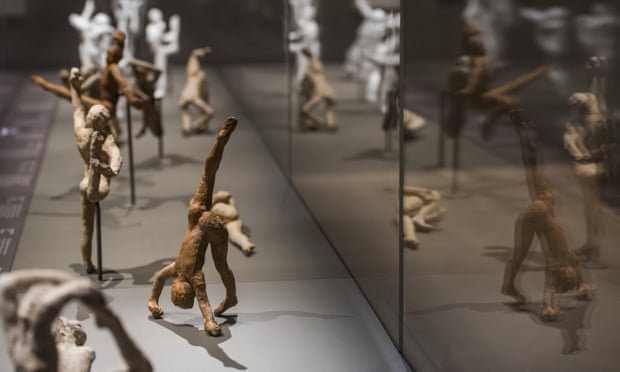
Rodin's sculptural figures and accompanying drawings were lovely. I loved his attention to movement and form, but disregard to realism. The figures were simplified to what mattered- and that was the line of movement. The textural quality of them was particularly nice- especially when cast in bronze- something rough but so valuable. Thinking about his simplifying of figures can reflect into my work.


I noticed that I've been interested in sculpture recently. Not so much to make it (I've always been poor in that skill area) but how sculptors must absolutely concentrate on forms- whether they are dealing with realism or more likely pushing the boundaries of figures.

But I do like how big and impending a sculpture can be- even a painting of the same size would not have the same effect. That's maybe why I love Henry Moore's bigger sculptures, and how impending but gentle/ characterful they can be. I want to be ambitious in extended practice, but maybe a giant bronze cast is off the cards... just for now...


House of Illustration visit

Edward Ardizzone

  • Two steps into the exhibition Wai Wai described it as "so incredibly english" and I can't top that description
  • Ardizzone's earlier work feels of course, historically relevant, but not so appealing to my personal taste. But my interest was piqued looking at his book covers- simple layouts and hand lettering. The lettering really got my attention actually, though I'm not sure why. It has the potential to look hard and manufactured, but subtly has a hand made element to it. It does not distract from the image, but is very much its own thing.


Quentin Blake

  • I've always appreciated Blake's work but never really liked it (as a child at least). Seeing it up close and examining it after a while of probably not seeing it very much at all made me appreciate it in a new way.
  • We were discussing the immediacy of sketches and working straight to paper with no editing, and how nothing ever beats the vibrancy of the first go- and Blake channels that into his work effortlessly. Though, I am told he makes use of a lightbox, so these aren't his first-first goes. Good idea Quentin!!


Laura Carlin

  • I've written about Carlin's practice before, and how I admire the way of working as an illustrator but also artist- if you can make that distinction at all.
  • It was lovely to see the work in real life, especially as it's three dimensional.
  • It was interesting to look at the work and examine how exhibitions work. The mini collections of work worked as a series but also stood on their own. Not just speaking as a fan but it would have been nice to have one more piece in there, mainly to divide up the huge empty space in the middle. 
  • What Carlin had taken was, to my knowledge, the rather simple theme of "London" and expanded it to a broad amount of works. It's an interesting way to do it, and shows the initial idea need not be niche, or complex, by any means. The research will do that for you.

20/11/2016

interview for Holly St Clair

As part of her dissertation research Holly has been interviewing artists and practitioners (including those that are students), and discussing this lead to a lot of personal reflection.

----------

What or who are your biggest influences? How did you discover them? What’s the big deal?

Of course I have my big favourites in illustration, but it’s been beneficial to look beyond this too- to exhibition, to sculpture etc. Looking elsewhere so there’s something else feeding into the cycle of illustration. I find a lot of it online!

I’m interested a lot in practitioners that edge on that, really quite fictitious, border of fine art/ exhibition and illustration- such as Mogu Takahashi, Misaki Kawai, Laura Carlin and Miroco Machiko. It’s something I admire, and aspire to.

How many of your influences come from childhood? // In what ways do they surface in your work?

So, so much.

I had a lot of my dad’s picture books from when he was small, so 60s illustrations by Richard Scarry, Margaret Bloy Graham etc. There were the video games- Animal Crossing, Vib Ribbon, Parappa the Rapper, and the films, notably Spirited Away and Olive the Other Reindeer.

What I note about all these pieces of media, are not so much them being aesthetically interesting and no doubt influencing me that way- but the tone of voice. Everything feels a bit wonky, a little bit self aware, funny at times, but ultimately sincere.

In what ways do the materials you use inform your way of working? Do you purposefully use materials/techniques that prevent you from editing/erasing?

When working personally I’ll work straight into a piece with no inhibitions, maybe no sketch at all. So gouache, pen, pencils. I notice people like these things more, but I can’t quite bring myself yet to approach a commission or piece of work with more value like that- the fear kicks in.

Do you consider what you do to be a craft?

It could be, but I haven’t invested the time or skill in it to be considered a craftsman.

What sorts of formal/informal training have you received? // And from that training, what skills did you learn? Is there anything you decided to ignore? Why?

I’m about to graduate from an Illustration degree, and did a Foundation Diploma prior to that as well as the usual school time art learning… but! Looking back I have had an incredibly small amount of technical training. I’ve never been taught perspective, colour theories, any real drawing skills at least in depth etc, which is a lot of why I don’t consider what I do as a craft. Does my image making suffer as a result of this? Yes? No? But it would certainly be different if I had.

Art education for me has mostly been about learning to think in different ways, and whilst we have been pushed to experiment with different things, there’s never been a point of sitting down and really learning a process. I mean, there has been opportunity, and I could have done that myself, but I’ve not had the care to. It hasn’t seemed important, so far. Maybe it will. But the thinking has been the big thing. Art education, for me, is assisted thinking.

A lot of your drawings (particularly from images I’ve see of your sketchbooks) feel very immediate, are you a conscious drawer or somebody who works instinctively/without thinking?

I don’t think about it, and then when I get too careless I make myself think again. I feel the fear of stagnation, and maybe fear more than I should that things should be more varied.

The slightly wonky, idiosyncratic feeling to your work is pretty charming, kind of folky too! You play a lot with anatomy (big hands!), why does doing that appeal to you more than something more true to life?

Drawing, in theory, gives the opportunity to do anything. Why anyone would want to replicate real life is above me, when you could be having a lot more fun with sausage fingers.

Do you ever purposefully under-exploit skill in your work?

I don’t think I have skills to under-exploit!

I’ve noticed you use visual shorthand quite often, there are some recognisable motifs through your work. As a stylistic choice, where does that come from? Is it at all a practicality/time-saving device?

It mostly comes naturally; I just consider it to be the way I draw. Conscious decisions are made sometimes. I’ve always been someone who works fast, so there’s not much time to think.

We’ve spoken casually a few times about illustration, style and all that contentious stuff. It’s something you clearly spend time considering - I’m thinking about this blog post in particular: http://mollyfairhurst.tumblr.com/post/152212030710/is-it-an-artists-responsibility-to-be-wild-a - would you be able to expand on those thoughts?

There are too many points in that piece to even start right now!!

What is your opinion on the idea of stylistic trends and fashion in illustration? Have you noticed any? Are you participating in a trend?

Sanctity of originality is a weird, contentious and spiralling concept, but really, I just see it as much more fun to have your own thing. It’s impossible to not absorb everything you see and have it appear in your work- which is fine! I’m not suggesting that we all do a David Bowie and consume no other art whilst working on our own projects. But it’s obvious when it’s more than that.

Besides, making art and developing a visual language, I think at least, is a very personal process- informed by things that you probably can’t even conceive just looking at a piece but, for the artist, remains a very personal thing. Looking at it and feeling that way, it seems rude to infringe on that by mimicking. That’s why I feel very self conscious if I feel I am imitating something else by mistake.

Your choice to bring those discussions about style and process on to social media is interesting too, have you found it useful as an image-maker to have that space to explore (for want of a better term) illustration discourse?

I’ll talk about it to anyone who is listening. Social media has been a great place to get in touch with other practitioners though, like yourself. 
16/11/2016

Tumblr radar feature


I received an email this morning notifying me I'd been featured on the tumblr radar for this image:


It was a definite surprise if not because that was something I'd doodled off my own back in not a very long amount of time, but as ever, that's usually the way people like things best! It's nice to get that recognition, though I'm not sure how man repercussions will come from it (though I noted a small spike in additional followers in the past 24 hours, compared to usual). It's appreciated regardless!

14/11/2016

Bill Bragg and relinquishing control in editorial compositions


Ben showed me the work of Bill Bragg in regards to leaving space in editorial illustrations for the art directors and designers to play with themselves. It may be worth making images like this for my editorial project, maybe adding titles or something there to show it's there for text. It could be shown alongside the empty image too.

09/11/2016

RCA Visual Communication/ Illustration pathways / Career Track Tuesdays Post Grad

I went to the Career Track Tuesdays talk on Post Graduate study and it was interesting! A lot of the information I want and need are on a more personal/ specific to subject level, but it gave a lot of info on application/ and importantly FINANCE, which at once both better and just as bad as expected.

I feel that application is such a heavy process and that I maybe haven't considered things enough to apply this year (though could always give it a go...). I'd benefit talking to people who have/ are doing an MA, to really figure out what it can do for an illustration practice.

One course I AM certainly interested is Vis Com at the RCA, (admittedly I found out about it by seeing that many practitioners I admire had taken it)


Regardless of whether I pursue it (yet or at all) I found these pathways descriptions interesting... 'Situated Illustration' sort of sounds like the ideas I've been discussing recently...

Thoughtbubble 2016

Thoughtbubble was as interesting and busy as ever
  • I was invited to table with the Grid Kids (Marianna Madriz, Wai Wai Pang, Disa Wallander, Jonny Clapham, Tim Blann) and sold most of my zine! It was really nice to exhibit alongside this great work, a little confidence boost if anything
  • It also got some preliminarily nice words from Zainab Akhtar which also means a lot, as a voice in the illustration and comic (critiques) community I really respect
  • As ever it was great to see so many other faces in the illustration and comics community again, though I always find Thoughtbubble much too fleeting to really engage with anyone- conversation from the front to the back of the table is never quite smooth, and there's just too many people full stop! Though of course, there were times before and after the festival I saw (most of) who I wanted to see! 
    • (note: karaoke is networking right?)
cute graphic made by Wai Wai

the table


04/11/2016

small reflection on practice/ tone of voice

This comes from the PPP session but also a tutorial with Matt earlier in the week

  • Tone of voice? I'm not sure! I like working on sensitive emotional things (see editorials) but also the daft and the silly. I'm not sure how I could word it, but getting an emotional response from my work is always something key.
  • Considering the idea of a practice that *goes beyond illustration*. I enjoy and would like to think of what I do as more typical illustration is successful, but I also have interest in more personal things (looking towards self-publishing, and vaguely beginning to look at artist residencies, teaching etc). I don't see why these sorts of practices can't feed into one another- "examining different contexts for my work to go into"
  • The discussion surrounding ideas for personal projects was convoluted and nonsensical (on my part) but keywords that came out of it : big, large scale, exhibition, immersive, education, exploration of visual language... I'd just, like to make something different, or very thoughtful, to what I normally do... 
  • My plan is to sit on those thoughts, using the first semester more for my traditional illustration portfolio and competitions and the second for that BIG project
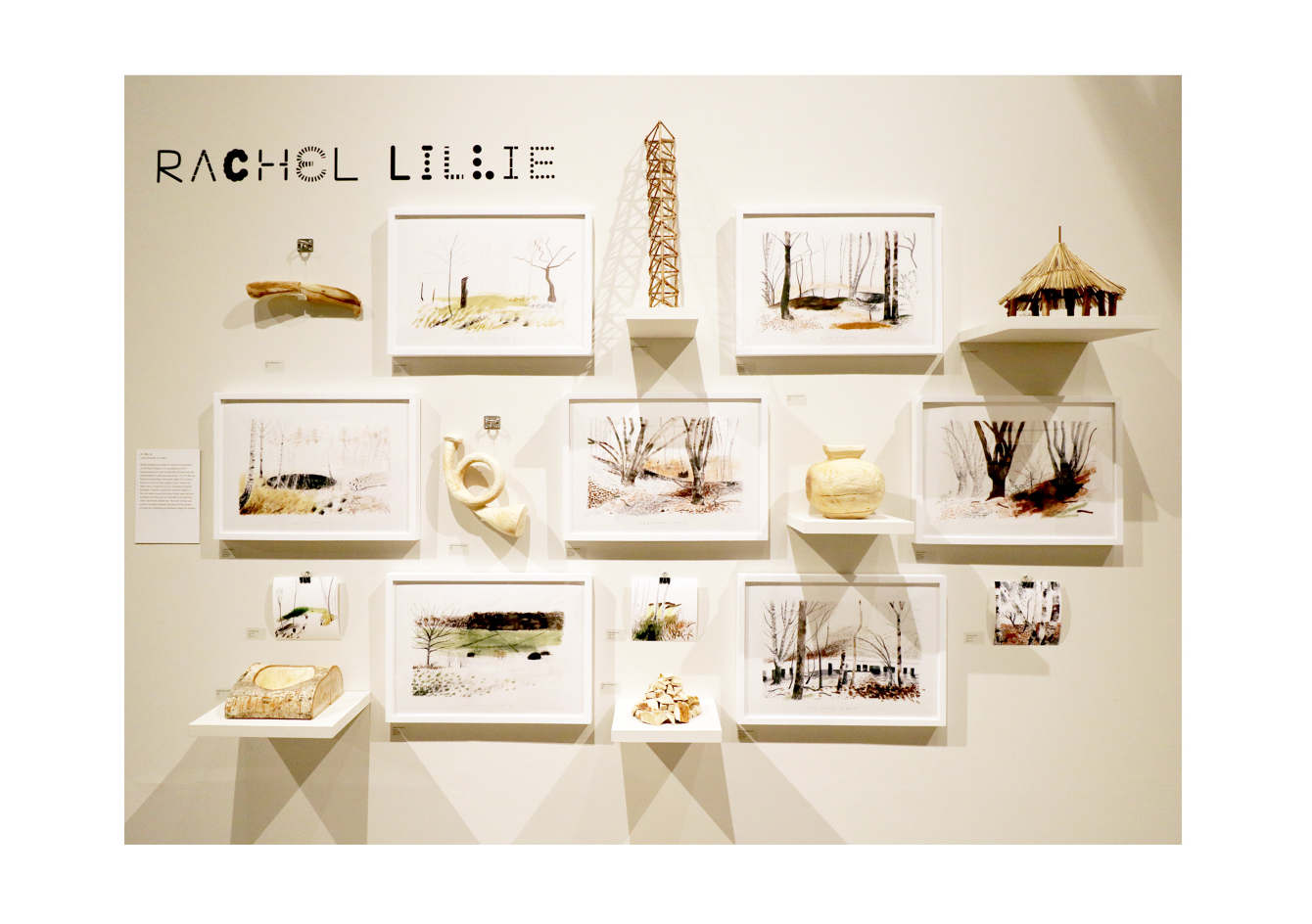
I was recommended to look at Rachel Lillie, someone who works as illustrator but also exhibits installations etc. I'm reminded of Laura Carlin, not so much in the way that she works but the way this sort of practice emerges, a balance between the commercially commissioned and the more personal.

Rachel Lillie
Laura Carlin
It feels a bit odd to start to look at working in this way when it hadn't occurred to me before, somehow it feels too late, but I haven't even began my career! It's something I want to consider...

website update

I've already set up a website and I'm pretty happy with how it is, I just wanted something simple that can showcase the work mostly. I also added my *editorial* one a week, and though it's something that I should (maybe) be looking to be selective with the end results with, I also like the idea of having this mass collection of images to show. Regardless, I only have two so far.

I didn't label the series as "editorials" and rather as responses/ stories. It doesn't seem necessary, and whilst they are editorials I didn't want to seem that I was alluding them to being live or commissioned projects. Following that conversation with Ben the other day, it didn't seem necessary to mock them up as pieces either. They're here to demonstrate illustrative skills of responding to particular texts, but are also free to be interpreted as the viewer will.


SaveSave