16/12/2016

updated tumblr look


I was happy with the previous blog layout, but fancied a change with the new year. I also like the idea of a single column as being less distracting/ overwhelming to look at. As ever, the priority was with minimalism. http://mollyfairhurst.tumblr.com

10/12/2016

MA options

A while ago I had a helpful discussion with Matt about MAs and the options/ benefits of them.

1: DIY

  • free, just be an artist
  • demands a certain level of focus, and consciousness about your own work, as well as self-criticism
  • it's essentially just continuing your practice, but must make sure you do it in a continually thoughtful way. Maybe there are periods of time where this is more intense and less commercially based. Maybe these can involve artist residencies.

2: Part Time

  • ability to complete an MA alongside work- financial benefits but also doesn't take you out of the industry if you've already got your foot in

3: Go hard or go home

  • the big guns, RCA, Konstfack etc
  • with the prestige they get you can only hope that they are worthy, and will open your eyes to the best artistic experience...
  • you will be surrounded by the 'cream of the crop'... inevitably getting a foot in the door but I wonder how much this relies on ALREADY knowing people too
  • ££££££££££
  • very hard to get in!
Overall, I realise an MA isn't something I want to shoot for just yet. I don't feel particularly ripe in my ideas or work, but I think I need to develop myself further before committing money to another period of education. My main reason for doing one is for the environment in which I can think about my work, but there is definitely the added benefit also of being recognised academically / to teach. 

With the money and time that would be invested, I need to be SURE that it is something I want to do- or rather, it is the right time and place.

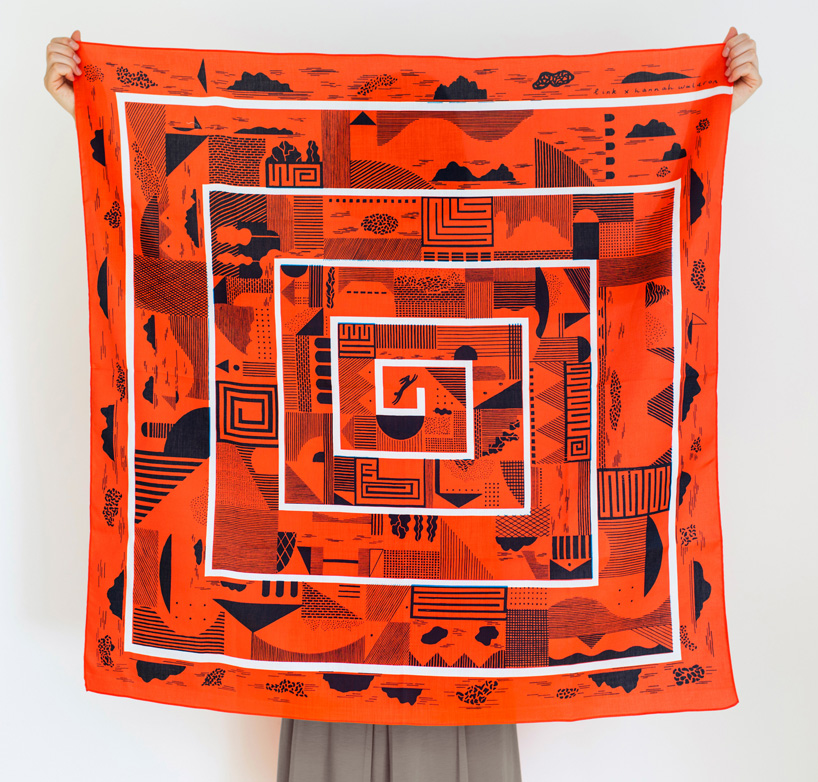
Hannah Waldron talk


I enjoyed Waldron's work visually/ thematically but mostly it was the thought processes behind them that got me thinking.

  • Using illustration/ image making as a research tool is something I've started to really think more about recently. Personally, I think it makes for much stronger and informed work, but sometimes when it is more abstract or this research isn't so clear, I wonder how much it is picked up on viewers/ clients. Does this matter?
  • Waldron's examination of science and facts in subjective, artistic ways is VERY interesting to me.
  • On the other (science) hand, Waldron treats her work quite scientifically, investigating colour and composition in quite a scientific/ theoretical way. I wonder if I should look at that more- and wonder if my work has become too instinctual.
  • I noted and admired her work ethic, particularly with media selections that can often take a long time to use. She also mentioned how artists should allow their media to inform their decisions (Brancusi, The Thinking Hand) and this also resonated with me, as I start to examine relinquishing control in my visual practice.
  • Following that, the idea of limiting yourself (i.e. colour palettes etc) when investigating a new tool is a good and interesting idea! I think it is helpful to also re-limit yourself to once again re-examine what you do.
  • Showing (gallery-type) work outside of the gallery space feels relevant, as someone who has been looking at galleries for the past two years in COP! It's good to see artists actually discuss this- and it wasn't even so much about the intrinsic hierarchies and inaccessibility of these establishments, but rather just making the work be its best. That was nice.

  • Textiles as response to poetry! ART FEEDS ART! (though look outside too). It was interesting to see such a big project based on one single poem. It suggests that, (for extended practice), a starting point does NOT have to be big.
  • To me, some of the work Waldron was making feels like a less traditional method of illustration, if not illustration at all. Maybe because of its environment, but this was noted before she went into great detail about exhibitions. I think dismissing labels can sound blasé, but at the same time the label of illustration is feeling increasingly pointless. Sometimes I think things are labelled illustration for their style above anything, regardless of their contexts.  

recent live briefs reflection/ notes

My last two live briefs, a feature in Forge Art Magazine and a print for PRESS fundraiser have both been really open briefs with an opportunity to make something that could be quite self-indulgent, or RATHER, an opportunity to examine my tone of voice in working and really make something that showcases 'ME'. This was particularly important in the Forge feature as it is, after all, a magazine about showcasing new creatives.

I don't know how I really identify what I make without it just coming naturally. I suppose my interest at the minute in my working are

  • emotion
  • narrative
But 'emotion', to me, certainly doesn't have to mean gloomy. It's more a visceral(?) thing?

---

At this point I think I need to get my head back in the game of working to tighter briefs too, but right now COP is a huge priority and these briefs have happened to come up with sooner deadlines too. At this point, I have accepted that I'll have to sacrifice some work I would have liked to have done for Extended Practice over Christmas in favour of COP (writing and practical), but the ideas are there and they are brewing and not forgotten...

21/11/2016

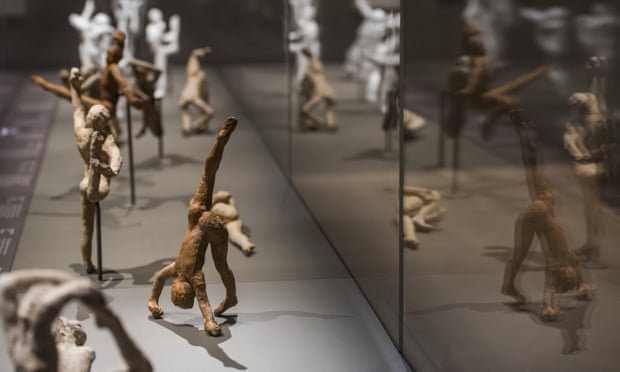
Rodin and Dance / Henry Moore at Tate Britain

I visited a couple of more historic/ fine art exhibitions during my stay in London.

Rodin's sculptural figures and accompanying drawings were lovely. I loved his attention to movement and form, but disregard to realism. The figures were simplified to what mattered- and that was the line of movement. The textural quality of them was particularly nice- especially when cast in bronze- something rough but so valuable. Thinking about his simplifying of figures can reflect into my work.


I noticed that I've been interested in sculpture recently. Not so much to make it (I've always been poor in that skill area) but how sculptors must absolutely concentrate on forms- whether they are dealing with realism or more likely pushing the boundaries of figures.

But I do like how big and impending a sculpture can be- even a painting of the same size would not have the same effect. That's maybe why I love Henry Moore's bigger sculptures, and how impending but gentle/ characterful they can be. I want to be ambitious in extended practice, but maybe a giant bronze cast is off the cards... just for now...


House of Illustration visit

Edward Ardizzone

  • Two steps into the exhibition Wai Wai described it as "so incredibly english" and I can't top that description
  • Ardizzone's earlier work feels of course, historically relevant, but not so appealing to my personal taste. But my interest was piqued looking at his book covers- simple layouts and hand lettering. The lettering really got my attention actually, though I'm not sure why. It has the potential to look hard and manufactured, but subtly has a hand made element to it. It does not distract from the image, but is very much its own thing.


Quentin Blake

  • I've always appreciated Blake's work but never really liked it (as a child at least). Seeing it up close and examining it after a while of probably not seeing it very much at all made me appreciate it in a new way.
  • We were discussing the immediacy of sketches and working straight to paper with no editing, and how nothing ever beats the vibrancy of the first go- and Blake channels that into his work effortlessly. Though, I am told he makes use of a lightbox, so these aren't his first-first goes. Good idea Quentin!!


Laura Carlin

  • I've written about Carlin's practice before, and how I admire the way of working as an illustrator but also artist- if you can make that distinction at all.
  • It was lovely to see the work in real life, especially as it's three dimensional.
  • It was interesting to look at the work and examine how exhibitions work. The mini collections of work worked as a series but also stood on their own. Not just speaking as a fan but it would have been nice to have one more piece in there, mainly to divide up the huge empty space in the middle. 
  • What Carlin had taken was, to my knowledge, the rather simple theme of "London" and expanded it to a broad amount of works. It's an interesting way to do it, and shows the initial idea need not be niche, or complex, by any means. The research will do that for you.

20/11/2016

interview for Holly St Clair

As part of her dissertation research Holly has been interviewing artists and practitioners (including those that are students), and discussing this lead to a lot of personal reflection.

----------

What or who are your biggest influences? How did you discover them? What’s the big deal?

Of course I have my big favourites in illustration, but it’s been beneficial to look beyond this too- to exhibition, to sculpture etc. Looking elsewhere so there’s something else feeding into the cycle of illustration. I find a lot of it online!

I’m interested a lot in practitioners that edge on that, really quite fictitious, border of fine art/ exhibition and illustration- such as Mogu Takahashi, Misaki Kawai, Laura Carlin and Miroco Machiko. It’s something I admire, and aspire to.

How many of your influences come from childhood? // In what ways do they surface in your work?

So, so much.

I had a lot of my dad’s picture books from when he was small, so 60s illustrations by Richard Scarry, Margaret Bloy Graham etc. There were the video games- Animal Crossing, Vib Ribbon, Parappa the Rapper, and the films, notably Spirited Away and Olive the Other Reindeer.

What I note about all these pieces of media, are not so much them being aesthetically interesting and no doubt influencing me that way- but the tone of voice. Everything feels a bit wonky, a little bit self aware, funny at times, but ultimately sincere.

In what ways do the materials you use inform your way of working? Do you purposefully use materials/techniques that prevent you from editing/erasing?

When working personally I’ll work straight into a piece with no inhibitions, maybe no sketch at all. So gouache, pen, pencils. I notice people like these things more, but I can’t quite bring myself yet to approach a commission or piece of work with more value like that- the fear kicks in.

Do you consider what you do to be a craft?

It could be, but I haven’t invested the time or skill in it to be considered a craftsman.

What sorts of formal/informal training have you received? // And from that training, what skills did you learn? Is there anything you decided to ignore? Why?

I’m about to graduate from an Illustration degree, and did a Foundation Diploma prior to that as well as the usual school time art learning… but! Looking back I have had an incredibly small amount of technical training. I’ve never been taught perspective, colour theories, any real drawing skills at least in depth etc, which is a lot of why I don’t consider what I do as a craft. Does my image making suffer as a result of this? Yes? No? But it would certainly be different if I had.

Art education for me has mostly been about learning to think in different ways, and whilst we have been pushed to experiment with different things, there’s never been a point of sitting down and really learning a process. I mean, there has been opportunity, and I could have done that myself, but I’ve not had the care to. It hasn’t seemed important, so far. Maybe it will. But the thinking has been the big thing. Art education, for me, is assisted thinking.

A lot of your drawings (particularly from images I’ve see of your sketchbooks) feel very immediate, are you a conscious drawer or somebody who works instinctively/without thinking?

I don’t think about it, and then when I get too careless I make myself think again. I feel the fear of stagnation, and maybe fear more than I should that things should be more varied.

The slightly wonky, idiosyncratic feeling to your work is pretty charming, kind of folky too! You play a lot with anatomy (big hands!), why does doing that appeal to you more than something more true to life?

Drawing, in theory, gives the opportunity to do anything. Why anyone would want to replicate real life is above me, when you could be having a lot more fun with sausage fingers.

Do you ever purposefully under-exploit skill in your work?

I don’t think I have skills to under-exploit!

I’ve noticed you use visual shorthand quite often, there are some recognisable motifs through your work. As a stylistic choice, where does that come from? Is it at all a practicality/time-saving device?

It mostly comes naturally; I just consider it to be the way I draw. Conscious decisions are made sometimes. I’ve always been someone who works fast, so there’s not much time to think.

We’ve spoken casually a few times about illustration, style and all that contentious stuff. It’s something you clearly spend time considering - I’m thinking about this blog post in particular: http://mollyfairhurst.tumblr.com/post/152212030710/is-it-an-artists-responsibility-to-be-wild-a - would you be able to expand on those thoughts?

There are too many points in that piece to even start right now!!

What is your opinion on the idea of stylistic trends and fashion in illustration? Have you noticed any? Are you participating in a trend?

Sanctity of originality is a weird, contentious and spiralling concept, but really, I just see it as much more fun to have your own thing. It’s impossible to not absorb everything you see and have it appear in your work- which is fine! I’m not suggesting that we all do a David Bowie and consume no other art whilst working on our own projects. But it’s obvious when it’s more than that.

Besides, making art and developing a visual language, I think at least, is a very personal process- informed by things that you probably can’t even conceive just looking at a piece but, for the artist, remains a very personal thing. Looking at it and feeling that way, it seems rude to infringe on that by mimicking. That’s why I feel very self conscious if I feel I am imitating something else by mistake.

Your choice to bring those discussions about style and process on to social media is interesting too, have you found it useful as an image-maker to have that space to explore (for want of a better term) illustration discourse?

I’ll talk about it to anyone who is listening. Social media has been a great place to get in touch with other practitioners though, like yourself. 

16/11/2016

Tumblr radar feature


I received an email this morning notifying me I'd been featured on the tumblr radar for this image:


It was a definite surprise if not because that was something I'd doodled off my own back in not a very long amount of time, but as ever, that's usually the way people like things best! It's nice to get that recognition, though I'm not sure how man repercussions will come from it (though I noted a small spike in additional followers in the past 24 hours, compared to usual). It's appreciated regardless!

14/11/2016

Bill Bragg and relinquishing control in editorial compositions


Ben showed me the work of Bill Bragg in regards to leaving space in editorial illustrations for the art directors and designers to play with themselves. It may be worth making images like this for my editorial project, maybe adding titles or something there to show it's there for text. It could be shown alongside the empty image too.

09/11/2016

RCA Visual Communication/ Illustration pathways / Career Track Tuesdays Post Grad

I went to the Career Track Tuesdays talk on Post Graduate study and it was interesting! A lot of the information I want and need are on a more personal/ specific to subject level, but it gave a lot of info on application/ and importantly FINANCE, which at once both better and just as bad as expected.

I feel that application is such a heavy process and that I maybe haven't considered things enough to apply this year (though could always give it a go...). I'd benefit talking to people who have/ are doing an MA, to really figure out what it can do for an illustration practice.

One course I AM certainly interested is Vis Com at the RCA, (admittedly I found out about it by seeing that many practitioners I admire had taken it)


Regardless of whether I pursue it (yet or at all) I found these pathways descriptions interesting... 'Situated Illustration' sort of sounds like the ideas I've been discussing recently...

Thoughtbubble 2016

Thoughtbubble was as interesting and busy as ever
  • I was invited to table with the Grid Kids (Marianna Madriz, Wai Wai Pang, Disa Wallander, Jonny Clapham, Tim Blann) and sold most of my zine! It was really nice to exhibit alongside this great work, a little confidence boost if anything
  • It also got some preliminarily nice words from Zainab Akhtar which also means a lot, as a voice in the illustration and comic (critiques) community I really respect
  • As ever it was great to see so many other faces in the illustration and comics community again, though I always find Thoughtbubble much too fleeting to really engage with anyone- conversation from the front to the back of the table is never quite smooth, and there's just too many people full stop! Though of course, there were times before and after the festival I saw (most of) who I wanted to see! 
    • (note: karaoke is networking right?)
cute graphic made by Wai Wai

the table


04/11/2016

small reflection on practice/ tone of voice

This comes from the PPP session but also a tutorial with Matt earlier in the week

  • Tone of voice? I'm not sure! I like working on sensitive emotional things (see editorials) but also the daft and the silly. I'm not sure how I could word it, but getting an emotional response from my work is always something key.
  • Considering the idea of a practice that *goes beyond illustration*. I enjoy and would like to think of what I do as more typical illustration is successful, but I also have interest in more personal things (looking towards self-publishing, and vaguely beginning to look at artist residencies, teaching etc). I don't see why these sorts of practices can't feed into one another- "examining different contexts for my work to go into"
  • The discussion surrounding ideas for personal projects was convoluted and nonsensical (on my part) but keywords that came out of it : big, large scale, exhibition, immersive, education, exploration of visual language... I'd just, like to make something different, or very thoughtful, to what I normally do... 
  • My plan is to sit on those thoughts, using the first semester more for my traditional illustration portfolio and competitions and the second for that BIG project
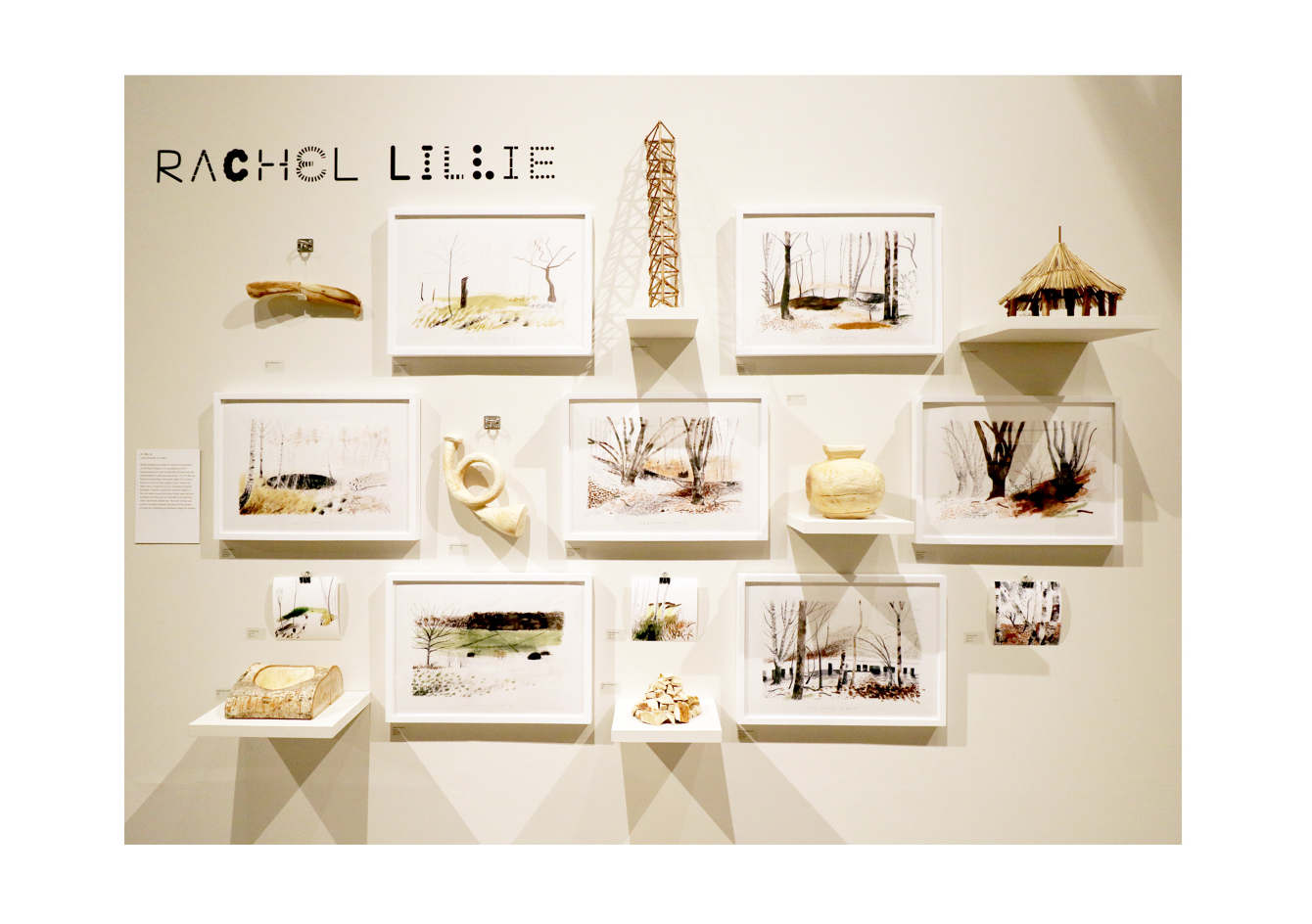
I was recommended to look at Rachel Lillie, someone who works as illustrator but also exhibits installations etc. I'm reminded of Laura Carlin, not so much in the way that she works but the way this sort of practice emerges, a balance between the commercially commissioned and the more personal.

Rachel Lillie
Laura Carlin
It feels a bit odd to start to look at working in this way when it hadn't occurred to me before, somehow it feels too late, but I haven't even began my career! It's something I want to consider...

website update

I've already set up a website and I'm pretty happy with how it is, I just wanted something simple that can showcase the work mostly. I also added my *editorial* one a week, and though it's something that I should (maybe) be looking to be selective with the end results with, I also like the idea of having this mass collection of images to show. Regardless, I only have two so far.

I didn't label the series as "editorials" and rather as responses/ stories. It doesn't seem necessary, and whilst they are editorials I didn't want to seem that I was alluding them to being live or commissioned projects. Following that conversation with Ben the other day, it didn't seem necessary to mock them up as pieces either. They're here to demonstrate illustrative skills of responding to particular texts, but are also free to be interpreted as the viewer will.


SaveSave

28/10/2016

editorial

cross-posting this from my studio practice blog as it largely concerns my portfolio and how I approach that:
---
Had a quick discussion with Ben and established:
  • it isn't so necessary to be restrictive at this point in regards to timing, formats etc. It's more important to make something good to show, and to enjoy what I make. If I spend time honing those skills in by the end of the project I'll (hopefully) be able to make an editorial in a short amount of time!
  • personal stories are what I'm better at and can result in images that are more interesting but also successful (as shown in the difference between the first two editorials I did)
  • try some spot illustrations!!
  • it's not really worth mocking up editorials into their texts... the art directors know what editorial looks like and it might be more useful to not assign an image so distinctly to one publication/ story. Having it open in your portfolio gives it a bit more scope.
  • other publications worth looking at: Boston Globe, LA Times, The Lancet, New Scientist

24/10/2016

LinkedIn fixed!

My profile is here: https://www.linkedin.com/in/molly-fairhurst-565082130

The account was restricted by accident, and was opened again this morning. I have since posted that post here, though I also shared it on social media. It got a few responses, some anonymous saying they agreed/ it had made them think a little differently, others that we shouldn't have any business in what an artist does at all (I disagree). I addressed these responses (that had been made via asks rather than chats) publicly on my blog. It's really interesting to talk about this kind of thing, though intimidating when publishing it to a potentially very large audience. The thing I didn't like about this is that I feel like it is the very very tip and beginning of a much larger dialogue, and I can't really fit all my ideas into one post. I also don't have a concrete opinion, which is good, but it also makes for a repetitive and cyclical statement. It's also something I've talked about with a few people recently, and in honesty, it's a conversation I'm a little tired of, as I'm not really encountering many different opinions.

Another technical issue, though not as pressing as before: I cannot close the second account I made

23/10/2016

LinkedIn woes!!

I'm really not sure what to do about my LinkedIn. I contacted various people on Friday, got told to take it to a certain place, and haven't heard back from them. I'd very much like the original account back especially as it's connected to my professional email address, but I need to complete that task for tomorrow, and have started setting up a new one in case I can't get it back!!

I'm now having technical problems setting this one up! When I try to connect to others they are not receiving the invites and when I give them the URL nothing is showing up despite the account being verified...

REGARDLESS! I've made a post and I have posted it to the account that is currently alive. Hopefully the other account will come back so I can cross-post it. I know LinkedIn is the *serious social media* but also wonder how formal these posts should be... I'd like to use them more  a starting point of a discussion, rather than just listing the be all and end all of it.

EDIT: it won't post for whatever reason! but I've put it on my non-uni blog and other social media, and here it is... it turned into more of a ramble, but it comes very much from the heart. I'm very open for conversation on this kind of thing.

Is it an artist’s responsibility to be wild? ( a beginning of a thought on illustration, who everyone is expecting to leave the party early)

This is not so much an argument but an ongoing dialogue I have been having with myself…
If you’re a believer in the prophecies of Lawrence Zeegan circa 2012 and co, you might be sat in your chair, tutting at the “cottage industry” of design, illustration.

Oh they’re so boring! you scoff, They love to draw something nice don’t they? I hate that!! Those charmless bastards! 

Now, I am not here to contest that there isn’t a chunk of industry that isn’t enamoured with the ‘navel-gaze’, the pretty, the flat, the empty. I am not here to challenge the concerns towards an industry that so enjoys giving to itself, taking from itself, a self-fulfilling whirlpool of delicately decorated ornaments and packages that swirl until your eyes are inked shut. Did you ever trust a circle?

But! I have a few questions, for all sides, circles, squares, and largely myself:
  1. Did you know that it is an urban legend that artists do not need to eat? Eating and living generally requires money, and money can be made from selling goods and products. A spoiler: trendy things sell.
  2. Away from the context of the self-published, can we scoff too much at the other elements of illustration that one may consider to be trend-driven? Should we consider that art directors have a good well amount of input into final outcomes, and maybe, indeed, an illustrator will give up their *artistic integrity* and draw yet another <cliché thing> so they can feed their kids/husbands/dogs. Priorities, am I right?
  3. Of course, I am a big believer in free-will and self-expression (and if you are not, I urge you to take at least thirty seconds to think that one through). As one may choose to draw something that would make Shrigley step back and say, “wow, that’s just nuts, absolutely crackers”, one may also just enjoy painting a few flowers, maybe a dog or two if they’re feeling a bit frisky. My point being, why are we here to berate someone for doing what they want to? 
  4. But, it’s a shame to become complacent and lazy. To blame art directors, to blame an industry in holding *you* back. In theory, you can take any job on and kick it into your own shape. Give it a go! The problem, I think, is not in being plain or nice, but in being derivative. To become derivative of others and even yourself isn’t the path with the most interesting view, not to mention sometimes offensive and hurtful, and I believe that to be exciting and fresh is the best thing you can do for yourself, and with this thought in mind, I would encourage anyone to be selfish.
  5. A point, for now. A question. What have you been looking at?
End thoughts: this is not an argument, but an ongoing dialogue I have had in my head. Please, challenge it.

I setup a Behance which is quite a nifty little way to display my work, and it can tie in quite nicely to LinkedIn if your profile hasn't been mysteriously restricted...

I was thinking about how it hadn't been very useful to me, and then remembered, I hadn't even tried to make connections there. It's useful, if you use it, I am sure.

21/10/2016

I was about to blog about LinkedIn and make a post on it when...


I have no idea why this has happened so have tried to contact them but the form keeps saying that there is an *error*. I'm trying to contact them and I really hope I can get an answer before Monday! If not I would consider making another account, but I had spent a while on this one and it would be a shame to lose it.

03/10/2016

PPP3

Who am I now- has anything changed my view of my practice?
  • I am looking towards a career of freelance editorial and illustration for publishing
  • I am interested in commercial work but over the past year I've found myself questioning the genre of illustration and its institutions. But what I do and enjoy is, regardless, very much illustration. 
What are my plans for the structure of my future practice? 
  • Individual? Freelance?
  • I'm considering an MA because I like the idea of continuing my practice and ideas in that kind of environment but I'm not sure it's worth it, at least, not yet. If I want to get deep about stuff maybe something like an artist residency would be more valuable? At some point? I was told to talk to Hannah Waldron when she visits LCA as she work as a designer but also engages in that sort of more *artistic* practice with residencies.
  • I think it's about a balance of commercial and less so work
  • I think an agent may be a good idea!

01/10/2016

.com

I got a domain for my website which was a lot easier than anticipated. It was spurred a little by this tweet by Eleanor Davis... (obviously not directed at me personally!!) I'm not kidding myself that this is a finished portfolio but I have had people contact me so it's nice to have something a bit more done and maybe even more accessible/ easy to navigate than tumblr

[link]

27/09/2016

website cleanup

I'm not so happy with my portfolio because of the work in it BUT  I've been cleaning up the actual layout to make it a nicer experience and easy to fit new work into. I put all of the galleries into a work tab, and made a page for my sketchbook work, because for me it's an essential part of how I work, and honestly I think some of it's the most interesting stuff I have been making...

[here is the website] (I need to sort a domain)

home page with splash image (could be changed, but I like this. Bold)


sketchbook/ small personal work images

25/09/2016

saying no

I thought I had an interesting project come up- and indeed it was interesting but offered very little as a payment point (less than half that I usually work for), which seemed a little off as they seemed to be the biggest venue to have offered me work. I turned it down, or rather told them how much I usually work for (and they not so much declined as didn't respond- maybe they are in the process of sorting it out and maybe one day they will get back to me).

Talking to a friend who works for the AOI she said that what I already work for on average is still on the cheap side, though it is ok to consider that whilst different places can offer different prices there should always be a minimum amount.

Pricing work is horrifying  hard and it's quite understandable that people take on cheap / free jobs (but it's bad!!). If a place is big enough to be good enough for exposure then they're also big enough to pay you.

PPP SUMMARY ? / STRATEGY?

The points from the slideshow ....

A summary of your personal and professional aims as an illustrator, practitioner or ……you tell us.
Evidence of research into professional practice and progression opportunities undertaken over the summer
A summary of further professional research activities to be undertaken as part of Level 6 (including timescales)
A proposal of what you intend to produce as self promotion material.

  • I am looking to work as a freelance illustrator, with a main eye for working on editorial, publishing and children's books.
  • As part of my practice I may also be looking towards self-initiated projects, such as prints, publications and maybe even looking to galleries.
  • Over the summer I took on a few poster commissions and entered the AOI Prize for Illustration, as well as regularly updating my creative social media
  • I vaguely began to question post graduate education, but do not think I can really consider it without talking to people who are doing it / have done it, and whether it is worth it (at this point of my career)
  • My thoughts at this moment are to promote myself with the traditional materials: a portfolio website, a physical portfolio, creative CV, a business card or two. Social media: instagram and tumblr, and maybe a twitter of professional usage but I'm not so sure on that one.

You will also need to produce an outline strategy plan including specific studios, practitioners, agencies and events that will form the basis of your research. This will form the basis of your first group workshop/tutorial.


    ¿STRATEGY?
    • Working on a self-initiated editorial project throughout the length of the year to fill my portfolio with those types of projects.
    • Doing publishing competitions like Folio Society, Penguin and The Macmillan Prize to get book type projects into my portfolio, with the added bonus of the possibility of winning and getting the work out there! (I believe these have deadlines largely in 2017)
    • Doing a self-published zine/ publication for Thoughtbubble (November 2016)
    • Figure out the benefits, the whys the whens the hows about masters degrees and artists residencies... both things I really don't understand and will only figure out through talking to people who have done them! I'm sharing a spot on Wai Wai Pang's table so I'll use some of that time to bother her about her work with MK Arts Centre, on her residency and how she got to teach there. (Autumn 2016)
    • Think about New Blood/ other graduate shows and whether that would be a good thing to do (summer 2017)
    • Make work that is portfolio worthy! And start to figure out how to contact people, and how to do it appropriately!! Polish it off. Online portfolios can be changed regularly, but physical portfolios less easily so, so I think the physical portfolio will be made towards the end of the year.
    Overall keep my head up and realise that drawing is something I would be doing anyway, in a **professional** context or not :-)


    21/09/2016

    priorities

    I think I struggled prioritising projects over the summer, and as a result didn't do as much self-initiated work as hoped (at least, more than sketchbooks and basic things). I had foolishly planned to do a few this week, around with my COP research (also not prioritised) BUT have possibly been offered my biggest job yet, so that's definitely going to be prioritised over self-initiated projects (but with COP needled in too)!!

    Overall my plans this summer haven't been great and am looking forward to the structure that studio time will give me.

    Fuzzy in print

    I saw these photos that Fuzzy Logic had been putting on their instagram and it's pretty cool to see the works printed (I've somehow managed to not stumble upon it myself yet). The caption "COME GET ONE OF OUR SNAZZY NEW FLYERS FOR £2 ENTRY AND A COOL EDITION TO YOUR BEDROOM WALL " was pretty nice, and part of the idea we always have with Fuzzy is that we want it to be something nice enough for students to stick somewhere, and I have been told by a few people that that is really the case!


    I don't have anything to do with the social media for Fuzzy but it's cool (and makes sense) that a lot of my work is posted to there. I also feel reassured seeing it in print, I think somehow it all looks much better! Which is good, because that is really what it is designed for.


    20/09/2016

    Girls That Gig Networking Event


    We saw this event advertised on Facebook as :


    And figured it was worth a go at going, not really knowing what to expect. We met a lot of people looking for band members, and a lot of other artists and art students. It wasn't the sort of place to really find potential work, though maybe a collaboration or two, but if anything was a good place to just meet other creatives in different areas and build up that community and at first I hadn't really been thinking about it in that way! But connections as support are still very valuable, and you don't know what might come up in the future. I'm still... not great at talking about myself or what I do. A big point is how I can talk about my work without visually showing people (even though I can with say, a phone). When at an exhibition or something you can talk quite easily about your own work because it's there on the wall but, here people would I ask what kind of stuff I do and I'd be like! Ah!


    11/09/2016

    House of Illustration visit notes


    I went to see the Soviet Picture Books exhibition!

    Artists I noted down: Vladimir Lebedev, Eduard Krimmer, Yevgeny Charushin

    • Lots of beautiful image making! A focus on movement and experimenting and texture vs simplicity. I see some things that are often tried to be replicated today but they're missing something. I'm not anti-digital work but I think it's harder to get something that feels free with Photoshop than  a brush. 
    • Sometimes too experimental? Vladimir's Lebedev story about the elephant left a little girl confused as to why the animals had "exploded". It's a reminder that the audience is the priority, though it isn't impossible by any means to make something complex and designed in an interesting way that can be enjoyed by children also.
    • It's all very nice to look at when you can't read russian- with context a lot of them become more sinisterly propaganda-y
    • Simple layouts and spot illustrations, no interest in over-complication


    Tate Modern visit notes


    • Hito Steyerl, How To Not Be Seen: A Fucking Didactic Educational
      • Funny, bizarre, surreal, left me feeling like I had understood it and then I realised there was nothing to be understood. Maybe. Felt like art that isn't so much pushing you to think about something so much as it just telling you about something they had been thinking about. A conversation to be started if you wanted, but mostly something to listen to and nod your head. Complicated but accessible, an amazing way of using tone of voice to attract people.


    • Start Here Gallery
      • A gallery space obviously designed to attract those not used to art, with encouragement and simplifications and an ease of "you can think whatever you like to about art". 
      • I wasn't entirely sure if it was directed more for children or possibly adults too but it wasn't overly patronising in tone.
      • This would have been a good thing to talk about in last year's COP essay!
    • Karel Appel + Cobra movement
      • there was a really good quote about painting / making work like children that would have been very useful / interesting but I am yet to find it again. However these are a cool bunch to look at in regards to intuitive image making / childlike creation / limitations of the figurative etc

    National Portrait Gallery + Serpentine visit notes

    National Portrait Gallery

    • There weren't so many particular pieces that stood out to me but it was that point in the day when you think you're having intelligent discussions (maybe so) but really they're just loose points. Regardless, being in the gallery environment always seems to spark conversations like that and these were a few topics that came up for us:
      • Can art ever be a non-selfish pursuit? It's hard to analyse when you're not coming from a non-art/design stand point. I'm always surprised that anyone can look through my work and tell me that they enjoyed it (and I have received messages like that). Do artists ever really create with the intention of others? Or rather, is there always a certain element of selfishness, of the pursuit of creating. 
      • Placement and context of images online: I've seen drawings that looked not dissimilar to what I had seen in this gallery posted by people on twitter, drawn with Photoshop. In honesty it's hard to not attribute more to a physical piece. There are also questions in regards to the equalising of images on the net: a tumblr feed of a gif of a cat, an inspirational person, some TV show fan art and a Henry Matisse throws all of these images together and gives them the same weights. Is it always bad?
      • When did we start thinking realism was a good idea??? And when did we stop
      • I need to paint on canvas / something solid

    @ The Serpentine (quick visit)

    • Alex Katz's style is illustrative (if that can really be a quality) but was not that interesting as an exhibition
    • simply, Etel Adnal had a beautiful use of colour and shape that would be good to refer back to.


    07/09/2016

    I'm still not quite understanding how you acquire commissions, but looking on a  creatively lead job site is a way to initiate that connection yourself I suppose. I'm not saying that I'm at a point to start doing that, but it's something to keep in mind. Maybe soon? https://jobs.creativereview.co.uk

    And who knew that you could be paid to make a powerpoint? I hope they enjoy funky slide transitions and sound effects

    31/08/2016

    Master this

    I have... vague thoughts about masters degrees... not so much ambitions because I do not feel I wholly understand them.  But before I ask someone about them I should probably do a bit of my own research.

    I suppose the main question is HOW BENEFICIAL IS THIS?

    I mean it can't not be beneficial to spend another year or so revelling in your own artistic processes but HOW beneficial is that. I gather it is maybe necessary to have such a qualification for certain jobs (teaching at degree level? which I am... certainly interested in) but how much joy / vital knowledge can it bring to someone that, although great is not necessary for progression of career and is very expensive to undertake...

    On a narrow look of courses they all seem nice but seem pretty similar to what I'm already experiencing at LCA.

    Could I have this same amount of time to spend thinking hard but potentially without the fee as say, an artist in residence somewhere? How does THAT work?

    30/08/2016

    portfolio

    I am yet to find a portfolio website maker that is not fuelled by some amount of sin. I crawled back to Format. For example, I want a very very simple website. This is very close to the kind of thing I like but the side bar is driving me mad. Regardless if I set all of the elements up on here first I can mess with it more and maybe I will learn to love it.


    Splash page: could do with some contextual info!


    Gallery listings of projects

    How the project pages look (they also all have small descriptions)

    I think the main point to this / any portfolio is that I'm not happy with the work that's on there. However! It is good to have the bare bones ready so I can easily add as I go along.

    Melek Zertal for the New York Times


    Like Dadu Shin's work for NYT this also caught my eye for its sensitivity. Although I mentioned before how I enjoy works of editorial that are actually quite literal this piece is surreal but subtly so- again not so much relying on (tired) visual symbols and metaphors but just being thoughtful and atmospheric.

    Seeing all this great work gives me interest in having the New York Times as an aspiration of a client. I also spotted JooHee Yoon's work on there too.

    briefs!

    LIVE BRIEFS I AM INTERESTED IN:

    • Folio Society
      • I enjoyed doing this competition last year 
    • The Macmillan Prize
      • A way to continue my interest in children's publishing whilst also entering it as part of a live brief 
    • Penguin Design Award
      • I ended up forfeiting my time entering this in 2016 for another live brief but do regret not taking it on. I could do all three books to make it a more hefty brief.
    These are all publishing based which shows my interests (more than I realised) but also makes them all quite similar. It is also hard to anticipate what live briefs will show up in the coming future, but these are three competitions that tend to run consistently year to year that hold my interest.

    SELF INITIATED BRIEF IDEAS:
    • editorial a week 
      • could be current events and less time based stories
    • book covers 
      • should I do this as well as the Penguin Design Award? good for portfolio though
    • children's book?
      • seems a little pointless do one separately to Pan Macmillan
    • self-published zine/ publication
      •  working with sequential narrative (?)
    • non-fiction / educational piece
      • for children?
    • a series of prints
      • I would not wish to print these in a traditional method, and I also do not think that is necessary. Like the self published zine it could explore parts of my practice that are less commercially done and more self initiated.
    • packaging / product
      • children's toy designs?
      • enamel pins (are they surviving?) / designed merch
    QUESTION: Can I get a print or a painting into a gallery? Is that what I want?

    EDIT: Marianna Madriz and Wai Wai Pang very kindly offered me a spot on their Thoughtbubble table to place a zine/ publication if I so wish! (I sold Newt Musical Express there too last year). They are also sharing the table with Jonny Clapham and possibly Disa Wallander and some of Jazz Dad Publications... the pressure is on to make something good ! All under the umbrella of GRID KIDS 

    27/08/2016

    Dadu Shin + editorial

    I haven't so up to speed on what's happening in the world of editorial illustration, but I saw this series that Dadu Shin is working on for the New York Times on disability and it kicked me. I prefer the more literal/ less metaphorical (?) images in the series (maybe editorial in general too), that rely on emotion and atmosphere rather than unnatural visual symbols. It's more subtle and I think it's more powerful as a result.


    I read this story this morning : ‘When you find my body’: The last days of Gerry Largay'. It was a powerful, touching, and immediately I was inspired to make illustrations. I am keen that any image made in response to this, or any story, should be sensitively handled. I am also keen to make images in response to sensitive subjects as well as fun and as bland ones. I'm trying to find where my tone fits and I think I could do a job of this. If I was to make something in response to this, as it would be 'unsolicited', I would be careful about how I publish it online / in my portfolio.

    10/08/2016

    tumblr

    I changed my tumblr theme, as well as getting rid of all text posts. It's just a little neater. The theme might look a little wacky on screenshot but runs much smoother as an actual website and allows viewing of multiple pieces at a time in a clear way.


     I have no intention of this being an official portfolio and like to post finished pieces as well as lighter things- personal paintings and drawings done on a whim, straight up terrible doodles... Altogether I want it to be an archive of how I work that is presented in a pleasing way. Something that wouldn't turn off a client and maybe something they'd be interested to look at- even if it's not just the fully fledged stuff.

    I opened up my Format account and had to pay to look at it again before realising that (for me) it was quite awful. I'm considering SquareSpace, and will start to build the website as a base ready for work that will be made. It won't be finished but portfolios always change...

    SaveSave

    poster jobs summer 16

    Since the summer started I've done a few poster commissions. Most of them have been a continuation of my work for Fuzzy, like stated before I'm really trying to push myself to make things I genuinely like, would suit my portfolio, are out of my comfort zones though of course, above all, please the client.


    Some I'm happier with than others, but I do really think I'm getting into the swing of knowing what I like AND how I can handle that in a poster/ digital format.

    I also got a job making a poster for the Flamenco Sketches comedy night in London. This was a connection made through social media and handled... informally. Everything about it was professional but sometimes it's also ok to send (and receive) fun gifs of LCD Soundsystem's James Murphy.

    Conor Jatter, who handled the commission and is also a designer, talked to me about my work after seeing it on tumblr- which goes to show that it's an OK pseudo-portfolio. I took it as a chance to try a painted commission (as that's where I have most fun) and it felt like a more successful attempt than what I made for CSN. 


    ££££££

    Since the end of the last academic year I have been asking for more money and what I think is a reasonable rate not only for clients but, honestly more importantly, for myself. I've had the odd job inquiry (mutual friend's band t-shirts, flyer work proposed from a tumblr user etc) that has (sometimes mysteriously) gone silent when I've asked them for the sum. I'm ok with that and I am no longer prepared to work for lower sums (what I charge now I would consider on the cheaper side) unless it truly truly truly was something spectacular/ close to my heart. There's little point when I could be using that time to sell prints, or engage in my practice in a personal way - I'm lucky to be in a position where I'm not clamouring for any scraps of money for a lot of work.

    I have had some troubles though. I've been working with Fuzzy for three years now and would consider it to be a good and trustworthy relationship. There's been issues with the payments not coming through, which has happened before and been corrected but this time it is taking much longer.  The guys have been really apologetic and good about it and have been chasing up who is in charge of payments. However, I do wonder if it is worth holding off further jobs from them until I see some money. Regardless, I will be away for a week soon so unable to work. 


    03/08/2016

    Notes from The Hepworth

    Hepworth + Moore + friends:

    • I didn't spend a lot of time thinking too critically about these pieces, but there's no doubt they're beautiful to look at. Like I was thinking about Hockney before, it's really nice / interesting to see artists engaging with the environment around them, particularly when it's local.
    • It's also a weird feeling to see artists grouped together frequently whether it's because their work/ location is similar or if they really were friends / colleagues. Art seems like such a selfish pursuit that I forget that it's not a vacuum. Same goes for design, though I find myself picking out peoples' influences much clearer there- a question of my own knowledge but how it is also an Industry.
    • Naive / folk / tribal art was very lightly touched on in Hepworth/ Moore exhibits but not gone into depth so much, as far as I'm aware. It seems a shame to not talk about these influences so much.


    Stanley Spencer
    • My critical and formal opinion of this exhibition is that it is WILD
    • It's hard to describe how I feel looking at these paintings, particularly in regards to the religious paintings which are what I remember and focus on mostly when I think of him. It is hard to imagine them in a context where they are taken seriously- stylistically they are bizarre, iconically and what is going on in the paintings is often even stranger. It is quite amazing to look at the big shipyard paintings that he was commissioned to make by somebody else when you also look at his other paintings.
    • So from that : I imagined Spencer's painting work to be insular and isolated but in some way he established himself as a successful and sometimes commercial painter, I want to find out how painters work- maybe not so much for my own career but just out of interest.
    • In all honesty my gut instinct is often to laugh at these paintings, but they are also incredibly dark and full of upset. Even after reading the painting descriptions I found it a little hard to understand where he was coming from but that's ok, once it's in the gallery it is the viewer's to think about.
    • The compositions themselves were also jarring, often they looked to be in grids but not quite - the perspectives would be off - sometimes the pieces felt unbalanced... but that all largely fed into the strange feelings of the work.

    • The exhibition manager (?) is a friend of the friend I visited the exhibition with and we coincidentally saw him briefly in Leeds afterwards. Where we were was too loud for me to actually hear him (I'm sure he had plenty of great things to say) but I was glad to hear that the exhibition was getting a good reception from Stanley Spencer fans. We also mentioned the young kids doing some kind of theatre outside on the grounds and he mentioned how they provide space to them as one of the few spaces in Wakefield. Art education is important and I forget that because my own making as a teenager was so insular (that isn't good).

    26/07/2016

    Notes from Salts Mill

    • I really enjoy the breadth and his different aesthetic styles. Everything still feels tied together as *him* though, it must be something about the feeling
    • Looking at Hockney and other artists I think about how sometimes a nice picture of a landscape can mean a lot- or rather not mean a lot and just make you happy. I think it is ok to not make massively deep things all the time - and sometimes I think that when you do do that it can become exhausted and cheap and naff. Be accepting, paint a nice hill.


    Sunflowers for Jonathon
    • This painting made me a smile a lot. It's just bold and again says a lot about paintings / art that is just designed to bring aesthetic and joy. We talked about how, although in this context it has a purpose, it would be funny to sign your name really big on every painting you make. We realised that children do this all the time, and that it's funny that they're not afraid to take ownership of every little thing they make. I know it's not possible / right / normal to sign a piece of illustration in a lot of contexts, but it made me think that I should be  prouder of what I make and not feel weird about such little things such as putting my name on a zine.


    The Arrival of Spring (iPad drawings)

    • I loved this exhibition! I love his sentiments towards the surrounding countryside and how lucky we are to have it (and for most of it to not be completely overrun with tourists). This probably also comes from growing up in largely the same area as what he has been recording.
    • I also enjoy his attitude towards technology, which is maybe not so expected for someone his age or at least someone so well known for physical painting. He's very open towards it, and presumably how it can be a tool to help him (or anyone)- it's a quick and light way of recording information.
    • Following that, he said something along the lines of how Turner would love to use the app because of it's translucency and layers. I can imagine a lot of people recoiling at that idea and I love that brazen attitude.
    • It is quite bizarre to see the iPad drawings printed at such a large scale (I'd guess around A0). From a distance they look largely like any of his other paintings but up close it's obvious, and at times can look sort of, *cheap*. I'm not typically fond of using digital media because it can come off so flat but I actually like his acceptance of pixels and flatness and weird gradients. It's letting your media dictate you a little bit and I think that is cool