27/10/2015
Thoughtbubble Zine
I was concerned that my idea was too basic or riffed on others' visual work too much but was given the go ahead! This was mostly a project to have fun I think, if not to experiment and not be constrained.
Thoughtbubble's focus may be mostly on comics and sequential art but I had noticed last year a fair share of illustrative works. Fanart is popular, and whilst it probably wouldn't fit under the conventional spectrum of fanart at TB (mostly of comics and animations I think) it's still from quite a recognisable subject matter. Some of the selected works might be a bit niche but they may 1) appeal even more to those who get it 2) are balanced out by what I consider and hopefully what others consider to be recognisable and mainstream album covers.
Mostly I think its selling point is humour, and it was good to take a break and make something light hearted and not so conceptually driven. As mentioned before some of the individual illustrations did well on social media (tumblr, instagram) so hopefully that's a signifier of some interest. I'd like to sell these outside of Thoughtbubble too, so maybe I could find a more specific audience online if needed. Illustration is about working to an audience but in all honesty I had a lot of fun making it and that feels good enough for such a small project.
So far I have bound seven copies, each with a different combination of paper. This was mostly by accident as I had not calculated the amount I needed to cut properly, but I think it is nice. It is always pleasant to be able to have some choice when buying a product! Still, I'm not sure I could make every single one an individual but the choice is still there.
23/10/2015
study task 2: product / context / function
PUBLISHING AND BOOK DESIGN
zines, comics/ graphic novels, children's (picture) books, textbooks, information manuals, flyers, recipe book, book covers, magazines, illustration/ art journal
product: The Golden Book of Biology, illustrated by Charley Harper
context: at home, in school
function: to educate, to decorate, to entertain
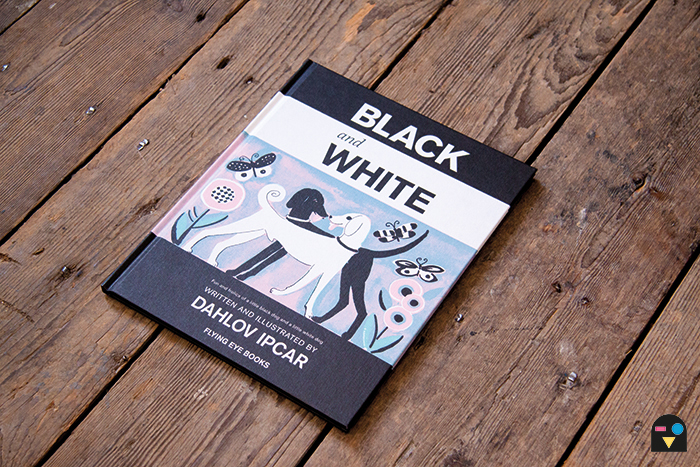
product: Black and White by Dahlov Ipcar
context: at home, at school
function: to entertain
product: Brat Farrar, illustrated cover + inside by A. Richard Allen
context: in the home, higher end bookshops
function: to decorate, to narrate
product: Lemon & Ket by Natalie Andrewson
context: comic book shop, comic convention, bookshop, in the home
function: to narrate, to entertain
product: Limner Journal
context: in bookshops, in the home, in the studio
function: to educate, to entertain (critical journal of illustration)
CHARACTER AND NARRATIVE
comics/ graphic novels, storybooks, branding, advertising, video games, animated films, concept art, toys, games
product: concept art for Spirited Away
context: animation studio, in a book to be sold with film's release
function: to design, to create ideas
product: panda by Siuhak
context: character as a brand, put on clothing, toys, homewares. may even be on advertisements
functions: to decorate, to entertain
product: character designs for Animal Crossing
context: video game design
function: to design, to create a functioning game
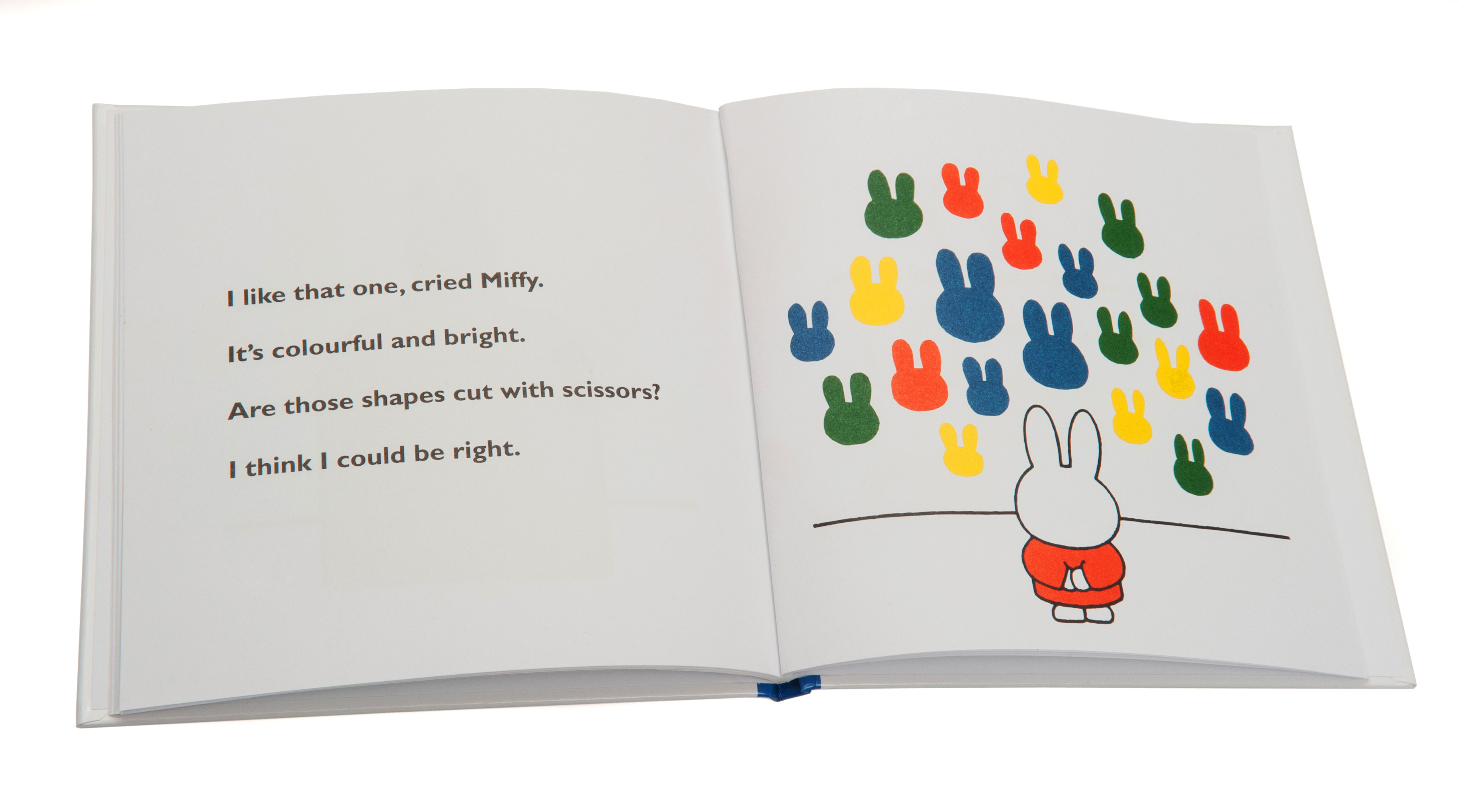
product: Miffy by Dick Bruna
context: in books, on merchandise (clothing, toys etc)
function: to entertain, to educate, to play
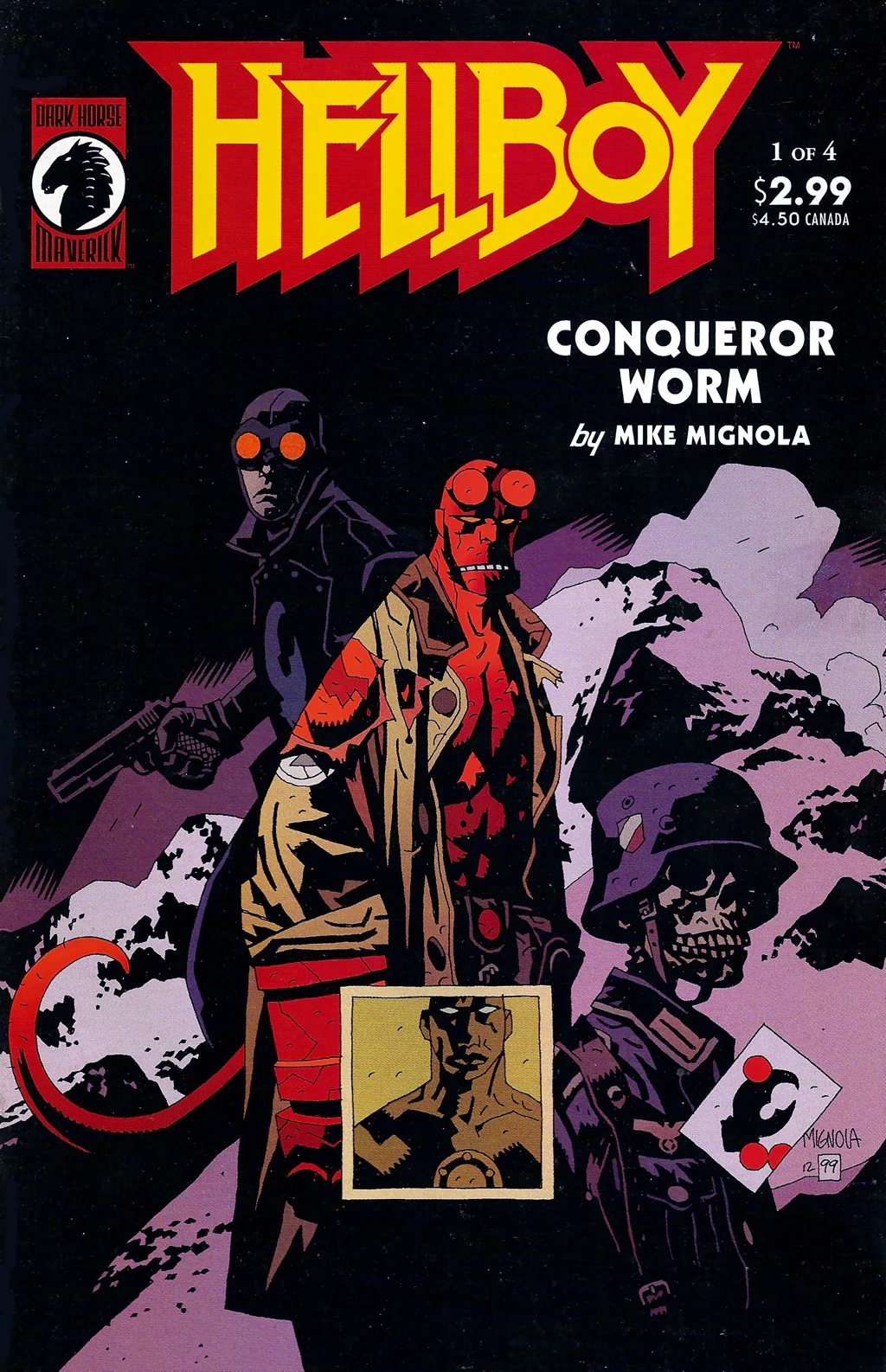
product: Hellboy by Mike Mignola
context: in comics, comic book shop, at home
function: to create a story, to tell a story, to merchandise
RETAIL AND MERCHANDISE
phone cases, tote bags, t-shirts, badges/ pins, stickers, kitchenware, home furnishings and textiles, mugs, album artwork, logo
OBJECT AND ENVIRONMENT
murals, advertisements, posters, set designs, toys, sculptures, product
phone cases, tote bags, t-shirts, badges/ pins, stickers, kitchenware, home furnishings and textiles, mugs, album artwork, logo
product: cap by Charlotte Mei
context: to be worn
function: to wear, to entertain (humour)
product: temporary tattoos by Rob Hodgson
context: to be worn
function: to wear, to decorate, to entertain
product: tote bag by Jon Boam
context: fashion, textiles
function: to wear, to decorate, to store
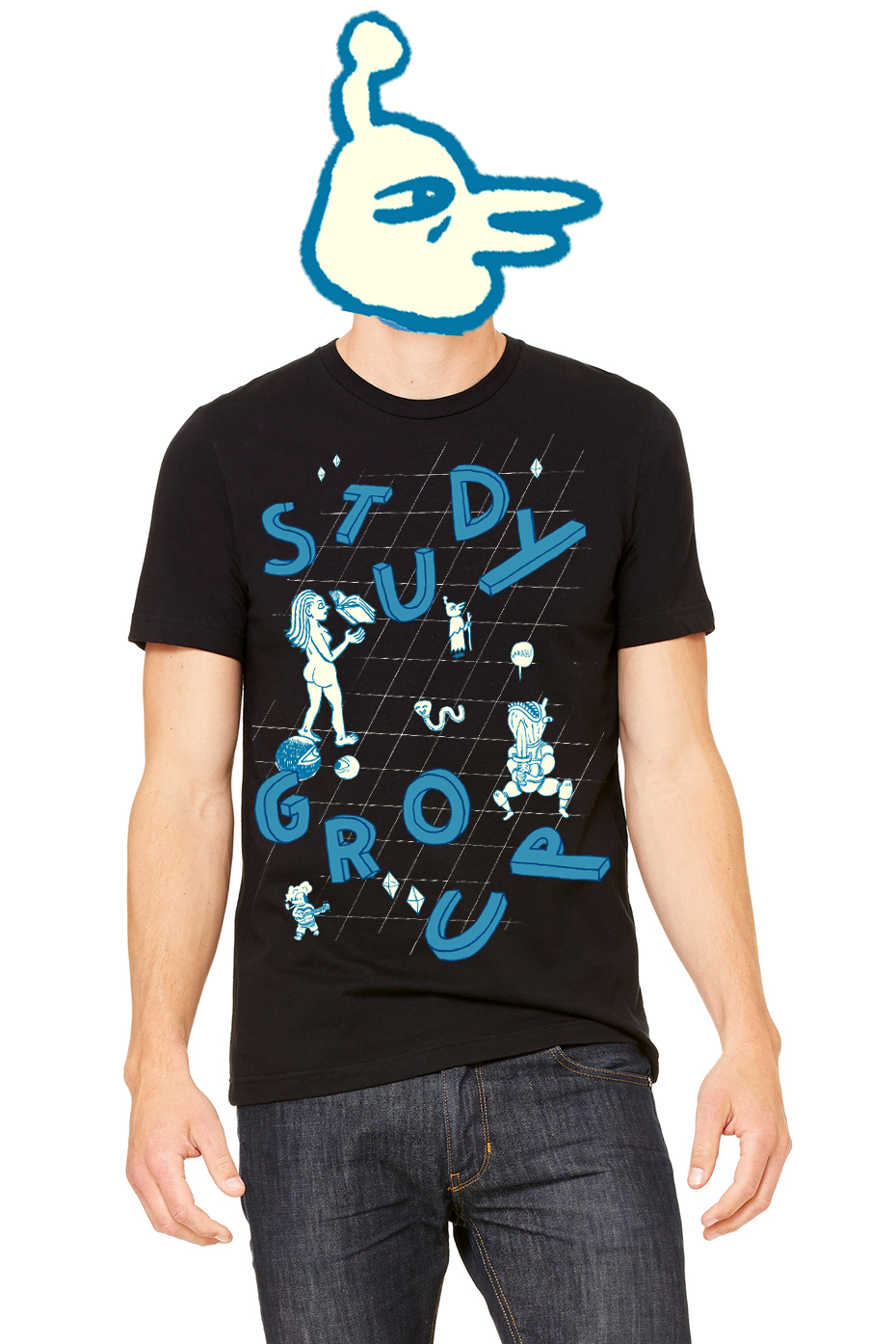
product: tshirt by Study Group Comics & Zack Soto
context: online shop, to be worn
function: to wear, to decorate, to advertise, to brand
product: pin badges by Natali Koromoto
context: online shop, giftshop, to be worn
function: to be worn, to decorate
OBJECT AND ENVIRONMENT
murals, advertisements, posters, set designs, toys, sculptures, product
product: mural by Supermundane
context: Leeds train station
function: to decorate, entertain (make commuters a bit less miserable)
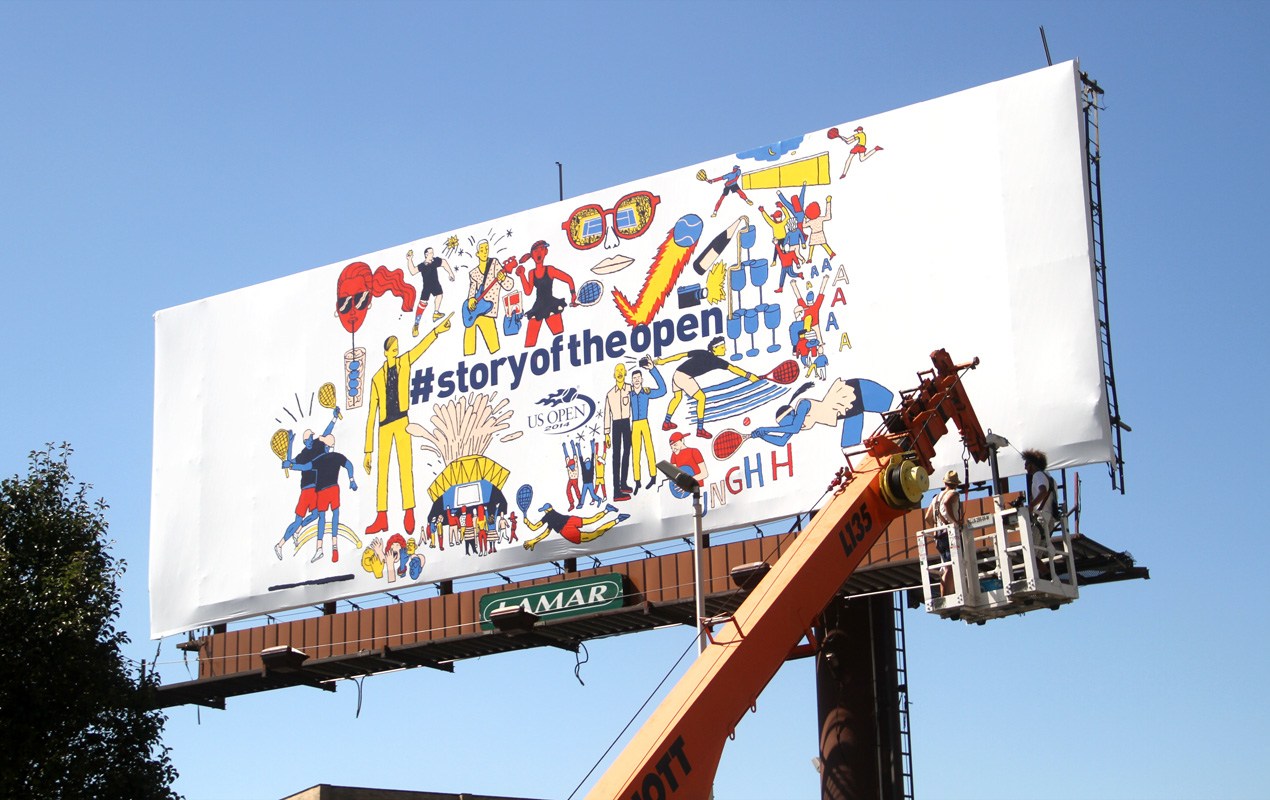
product: billboard by Josh Cochran
context: advertisement for the US Open
function: to advertise, to decorate
product: set design by David Hockney
context: for the Glyndenbourne Opera, 1975
function: to decorate, to tell a story
*I wasn't sure if Hockney could come under this, as being deemed a fine artist. Still, as a commissioned piece of work, would that make it something of an illustration?
product: sculpture by Eun-Ha
context: for the home, in a gallery
function: to decorate, to entertain (it is cute and may make you smile)
product: key holder by Eleanor Borstrom
context: in the home, higher range homewares/ lifestyle shop
function: to store, to decorate
22/10/2015
The Guardian brief- final evaluation
This project has been my first time entering a competition and I learnt a lot from it! Particularly in how I manage my time, I often found myself too caught up in the excitement of something that could potentially be published and neglected my other work a bit. It also gave me an insight into editorial illustration, and even though if this was a 'real' brief I probably wouldn't have had so much time to work on it so the process may have been different- the image itself was still editorial.
The illustrations did not place in the competition but I learnt a lot from it and I'm quite happy with the results despite their flaws. I think there is potential for them to be in a portfolio as I think they visually look nice enough with the added bonus of them being applied to an actual brief. Still, by the time I start to put together a portfolio I hope I will have improved enough for these to be obsolete.
![]() |
| creating the perfect portfolio |
![]() |
| creative careers |
Strengths:
- The images work well as a series with a consistent colour scheme and aesthetic style
- Using pencil and colouring it digitally is a new technique I'm coming to terms with and I think I've done quite well to make it look like enough of a final image and not just a sketch (debatable). Still, I've been practicing this technique a bit in personal drawings and in uni work so now may be the time to look for something new to do.
Weaknesses:
- Consistency is good but I think the creative careers and the analogue media images were too similar looking. The series is mostly made of head shots and looks boring and same-y and I should have pushed myself to do something more adventurous. More diversity may have even helped me place!
- Following from this the images are very flat and lack depth and perspective. I'm still concerned about the balance of the image for analogue media, with too much empty space being placed at the bottom of the image.
- Ideas behind images may be confusing and not make sense OR be too obvious (perfect portfolio). Neither of these are good for editorial illustration when the focus is so heavily on the idea behind the image.
![]() |
| revival of analogue methods in the digital age |
The illustrations did not place in the competition but I learnt a lot from it and I'm quite happy with the results despite their flaws. I think there is potential for them to be in a portfolio as I think they visually look nice enough with the added bonus of them being applied to an actual brief. Still, by the time I start to put together a portfolio I hope I will have improved enough for these to be obsolete.
12/10/2015
thought bubble zine initial thoughts
A lot of my sketchbooks over the summer were just odd doodles, with few connecting themes. The one 'project' that I did begin and start to get excited about was the animal band name puns. After working on the Author/ Murakami brief it's nice to work on something small and light hearted. I suppose in a way it's fan art, though maybe not in the sense that Thoughtbubble is used to. Maybe this makes it less suited to a comics convention, though Thoughtbubble also showcases less traditional things too
I think it's also important if I go ahead with this project to carefully consider which album arts to appropriate- they need to be recognisable/ iconic to a wider audience whilst I would like them to maintain to my interests. I also think it would be nice to not just copy the album art but showcase the band members as their animal counterparts in different scenarios
I coloured a couple of the initial album sketches, and they were received well on social media, which suggests that they may be sellable. However the zine will be monochrome, so I'm not sure how well they'll work out in greyscale
But I am a bit concerned that this is an easy way through this brief, and whether ideas that were wholly original to me would be more appropriate. I started contemplating a small comic idea based on the girl and crocodile character sketches, but am wondering if I would have the time to do this well.
Maybe something as simple as a book of faces or crocodiles done very nicely would be ok. I have a zine of Jon Boam's that has no narrative and is simply just a collection of images with a theme that I think works successfully.
11/10/2015
study task 1- Who am I? Why am I here?
5 things I have learned so far on the programme:
5 things that I want to learn more about:
5 skills that I think are my strengths:
5 things I want to improve:
5 practitioners that demonstrate my interest in illustration:
Jillian Tamaki is a huge inspiration. She clearly has a lot of technical skill that she puts to good practice whilst maintaining an interesting tone of voice and style that can be adapted over a wide range of projects. She is unique and yet flexible, which I think are both very important qualities to have as an illustrator. She is also talented as a writer which is also handy!
Geoff McFetridge has an incredible eye for shape and figure! He achieves a lot- humour, feeling, visuals- in a very simple image. Since I started this course I've been thinking about shape in image a lot.
Laura Carlin is a talented editorial illustrator, she has the ability to tackle serious articles thoughtfully and carefully, which is admirable. I think that a few have tried to copy and emulate what she does, but have not been able to achieve this thoughtfulness and delicacy. I'm also interested in how she works with analogue media.
5 websites/ online resources:
- keeping a good sketchbook isn't about being pretty but being productive! sketching and scamps and redoing images over and over again is key to getting an eventual successful idea
- to-do lists are very handy and are a great way to keep on track with work but also de-stress
- more technical skills: I had barely touched Adobe Illustrator before this course and had done very little animation
- experiment with styles and skills: there is still time to be a failure, and messing up leads to doing things right and better (and sometimes the mistakes are good!)
- context and meaning makes an image so much more interesting
5 things that I want to learn more about:
- how can I establish a working creative practice that means I can produce work that I deem successful and *good* but also make a living wage?
- how to be a good professional and get these jobs!
- how does editorial illustration work and is this a suitable practice for me?
- using analogue media and translating it to digital formats: something I started to look at in the first year but have yet to master either!
- it's a bit general but how to be a really good illustrator. what makes a good artist, and how can I make unique and creative work
5 skills that I think are my strengths:
- I spend a lot of time in the ideas stage and try to create a good range in the sketchbook stage in the hope of getting something good! Sometimes I wonder if this is lost in the final piece though
- short deadlines: I work better with a little pressure and smaller projects seem to get my brain ticking more than long winded ones. I need to learn to sustain ideas.
- time management: I've always been able to manage deadlines
- I think over the past year I've become better at not procrastinating. working in the studio environment helps avoid this a lot I find!
- I tend to veer towards character based work whether a brief specifically calls for it or not, so maybe it's a strength (that I play to too much)
5 things I want to improve:
- my time management may be good, and I may get things done in time but I still struggle to prioritise what I do. this results in rushed jobs with a poorer quality and/or lots of extra hours
- my essay writing skills: the COP module was a blunder for me last year! writing the essay was a downfall of mine, but so was coming up with a theme for it.
- my presentation/ communication skills: last year's presentations were actually a lot better than presentations I have done in the past, but were by no means good. I'd like to be able to speak more confidently and have more confidence in my ideas, be it in a presentation or crit scenario.
- I think I've improved in my flexibility but I'd like to be more adaptable as an illustrator, visually and thematically
- I think that this year may be the time that I need to find more of a voice in my work, or be able to express one. Not in visual style so much (I need to work at being adaptable) but in context and opinions and themes.
5 practitioners that demonstrate my interest in illustration:
Geoff McFetridge has an incredible eye for shape and figure! He achieves a lot- humour, feeling, visuals- in a very simple image. Since I started this course I've been thinking about shape in image a lot.
Laura Carlin is a talented editorial illustrator, she has the ability to tackle serious articles thoughtfully and carefully, which is admirable. I think that a few have tried to copy and emulate what she does, but have not been able to achieve this thoughtfulness and delicacy. I'm also interested in how she works with analogue media.
Michael DeForge has a wild imagination that I'm not sure I could ever rival, but is always a good inspiration to have to hand when wanting to make something more *out there* narratively but also visually. His imaginative drawings go beyond single images and he is also a talented storyteller and comic maker.
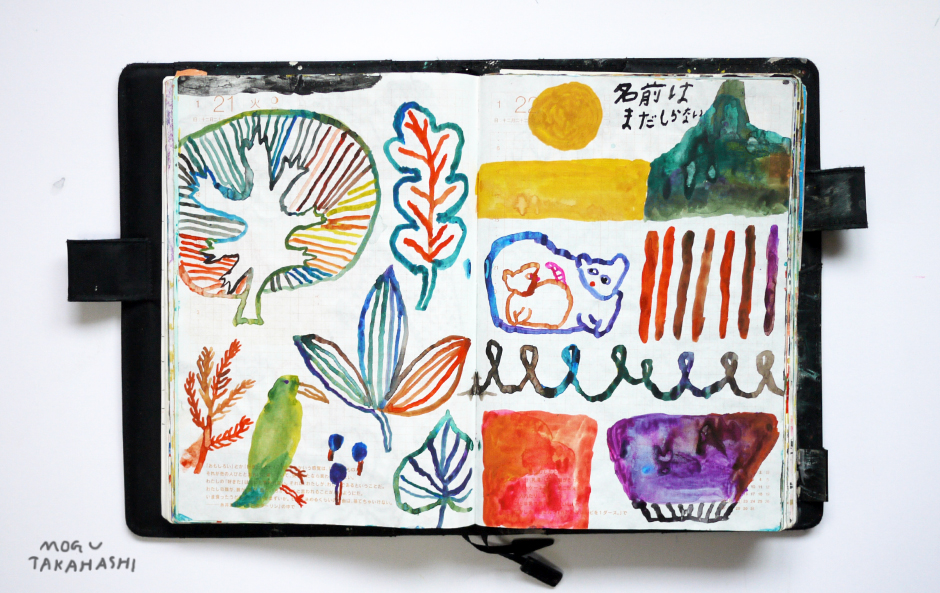
Mogu Takahashi is someone I touched upon in my PPP presentation of last year. I admire her playfulness and looseness, and whilst it might not be something that would be entirely suitable for what I want to do (and copying anyone is just plain silly) her clear confidence and lack of fear in her image making is an inspiration to me
5 websites/ online resources:
- It's Nice That: offers a wide range of contemporary design practice as well as illustration, and blogs about these in bite sized chunks for quick new information. I follow It's Nice That on social networks for a steady stream with little effort!
- The AOI: highlights contemporary illustration practitioners whilst, very importantly, offering advice and support (though I believe you have to be a member to access this)
- D&AD: I believe D&AD works in a similar way to the AOI, providing help and support but to a broader design community. The events they hold are renowned in the design community and offer huge opportunities for networking.
- Heart Agency: understanding how an art/ illustration agency works is good to know and potentially very important for my practice, but agency websites like Heart also provide information and news about practising illustrators.
- Dutch Uncle: similar reasons to why I picked Heart, but also provides a little bit broader information about the design community than Heart- with animators and graphic designers also in their roster, and possibly on a more international scale with clients in Japan.
Subscribe to:
Comments (Atom)